
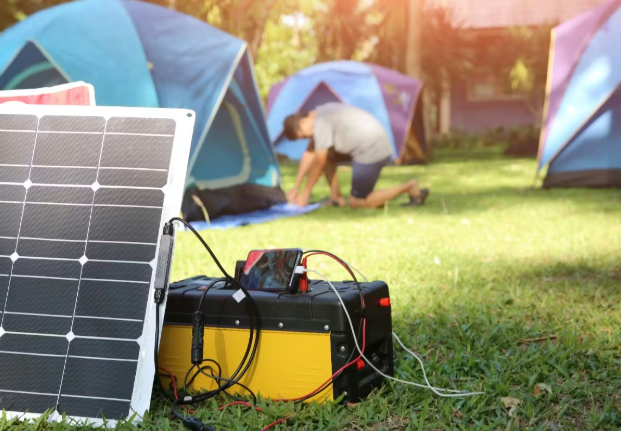
You want power without the gas, the smoke, or the noise. Solar generators portable are the answer. They grab sunlight through high‑efficiency solar panels, store it in a durable LFP battery, and deliver steady AC power through a built-in inverter. No pull‑cords. No mess. Just plug in and go at the campsite, in your RV, on the beach, or during a quick outage at home.
Anker SOLIX designs portable power stations that feel tough and easy to live with: strong shells, smart safety systems, and simple controls. Add a folding solar panel, and you’ve got a quiet power setup that travels well and just works.
Why Go Portable?
- Quiet & clean: Run lights, a cooler, laptops, cameras without fumes.
- Travel‑ready: Compact, easy to carry, quick to set up.
- Flexible power: Multiple ports (AC, USB‑C, USB‑A, DC/12V) for phones to small appliances.
- Smart solar charging: MPPT tracking squeezes more power from sun; high‑efficiency panels (around 23–25%) make short days count.
- Long life: LFP batteries handle thousands of cycles and hold up for years.
Pick Your Portable: The Anker SOLIX C‑Series
Simple rule of thumb: the higher the number, the more devices you can run and the longer they’ll last between charges. Always check your device wattage.
- C1000 – Weekend RVs and longer trips. Runs a mini‑fridge, lights, laptops, camera gear, and small cooking tools (check watts). Fast to recharge.
- C800 Plus / C800 – Campsite hero. Perfect for tailgates, road trips, projectors, CPAPs, coffee makers (wattage‑dependent), and drone charging.
- C300 – Day trips and light kits. Phones, tablets, lights, routers, small fans.
- C200 – Pocketable backup. Phones, headlamps, action cams, and emergency lighting.
Tip: If you’re unsure, size up. Extra headroom means less stress when you add one more device.
What a Portable Solar Generator Can Run
- Outdoors: camping lights, mini‑fridges/coolers, speakers, projectors, induction mugs, camera batteries, drones.
- RV/Van: vent fans, routers, laptops, lighting, small cooktops or coffee makers (confirm wattage).
- Home backup (short outages): phone and laptop charging, Wi‑Fi, lights, a compact fridge, medical devices like CPAP (model‑dependent).
- Work on the go: cordless tool charging, label printers, small monitors.
How It Works (the quick version)
- Panels collect DC power from the sun.
- The portable power station stores that energy in an LFP battery.
- An inverter turns DC into AC, the same kind of power your wall outlets provide.
- Plug in your gear. That’s it.
No fuel cans. Much less noise. Use it indoors or outdoors (keep panels dry and placed safely).
Solar Input & Charging
- MPPT controller (≈99% tracking efficiency): locks onto the best voltage/current to harvest more energy from changing light.
- Multiple ways to recharge:
- Solar when you’re off‑grid
- AC wall outlet before a trip or storm
- 12V car port while you drive
- Solar when you’re off‑grid
- Panel efficiency (~23–25%): quality panels convert more sun into usable power, which helps on short winter days.
Want whole‑home backup with 120V/240V and higher output? Look at the Anker SOLIX F‑series (F3800, F3000, F2000). Keep the C‑series for mobility; use F‑series for the house.
Buying Checklist (Keep It Simple)
- Capacity (Wh): more watt‑hours = longer run time.
- Output (W): make sure the inverter’s continuous watts cover your biggest device; check surge requirements for tools.
- Ports: AC outlets for appliances, USB‑C for modern laptops/phones, DC/12V for coolers and accessories.
- Weight & handle: if you’ll carry it often, favor comfort and compact size.
- Solar input range & connectors: match panel voltage and plugs; higher input usually means faster solar charging.
- Battery chemistry: choose LFP for longer life and better thermal stability.
- Safety & warranty: look for strong BMS protection, certifications, and solid support.
Care & Use Tips
- Keep it topped up before a trip or storm.
- Shade the power station; let the solar panels take the sun.
- Wipe dust from panels to keep efficiency high.
- Store indoors, dry and cool.
- Update firmware when available for better performance and standby life.
FAQ: Portable Solar Generators
Are solar generators portable safe indoors?
Yes no fumes. Still, give the unit space for airflow and use proper cables.
Can a portable unit run a coffee maker or hair dryer?
Sometimes. Check the device’s wattage and compare it to the inverter’s continuous and surge ratings.
How long will it run my mini‑fridge?
Depends on the fridge draw (often 60–100W running, higher on startup) and your battery capacity. A mid‑size portable can handle hours; bigger units, longer.
Do I need special panels?
Use panels that match the station’s input voltage and connectors. Quality folding panels with MPPT charging perform best.
Gas vs. portable solar?
Gas handles long, high‑draw jobs but needs fuel, ventilation, and maintenance. Solar generators portable are quiet, clean, and easy ideal for travel and short outages.
The Bottom Line
If you want power that travels, go portable. The Anker SOLIX C‑series C1000, C800 Plus, C800, C300, C200 covers everything from a quick beach day to a long RV weekend. Add efficient panels, take the sun with you, and keep your plans rolling quietly with these reliable solar power generators.
